
About the Racial Justice Dialogues
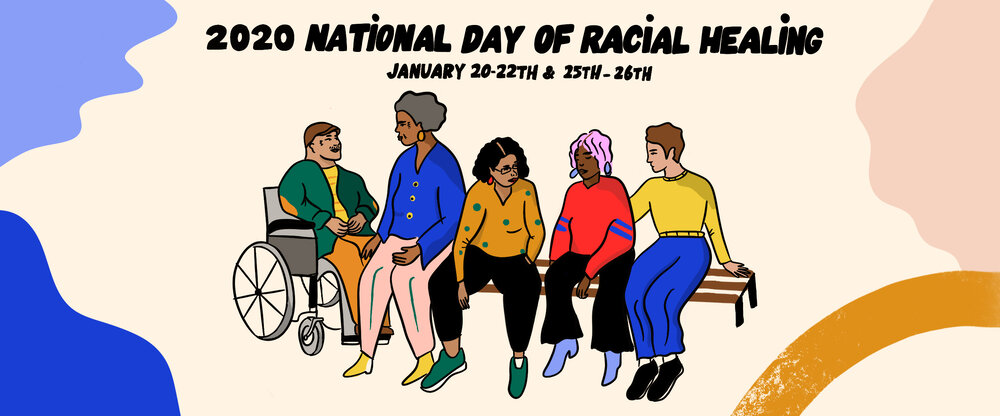
Trained Heart 2 Heart facilitators will set the intention and lead their respective racial justice dialogue circle. Some circles will be cross-racial dialogues to build empathy across different racial and ethnic identity lines. Some circles will be racial affinity dialogues, where individuals of the same racial identity will grapple with the ways racism specifically impacts their community. Both kinds of dialogue circles are intended to provide space for community members to participate in storytelling and listening to build empathy and understanding.
Helpful Communication Guidelines for Racial Justice Dialogues
Participants are invited to consider the following Communication Guidelines before participating in a racial justice dialogue:
Respect: Treat others how they want to be treated. Ask and observe to learn.
Speak for Myself: Share your ideas and leave room for others to share theirs. No one can speak for anyone else or group.
One Mic: One person speaks at a time without interruptions so that we can listen to each other.
Make Space, Take Space: If you’re more comfortable sharing, MAKE SPACE for others to share their thoughts. If you’re less comfortable sharing, TAKE SPACE to share your thoughts.
Honesty: Be honest about your thoughts and feelings, and share them with yourself and others.
Don’t Yuck My Yum: Respect other people’s ideas, beliefs and cultures, even if you don’t agree or they are different than your own. It’s everyone’s responsibility to learn more about different cultures by asking respectful questions, challenging the assumption that our cultures are the “right” way, and including people of all cultures.
Intent and Impact: It is possible to mean well AND still hurt someone. We are responsible for what we mean to do and how it affects others.
Try On: Try on new activities, ideas and opinions before rejecting them. You might be surprised that they fit. Push yourself to do new things even if they make you uncomfortable.
Be Present: Let go of all the other things you need/want to be doing and keep your focus here. Think about how you show that you are present. Body language, eye contact, and active listening all communicate to others.
Confidentiality: What’s said here, stays here. If you want to talk to someone about what they said, ask permission. They can say yes, no, or maybe later.
About our Partners
California Conference for Equality and Justice
The California Conference for Equality and Justice (CCEJ) is a human relations organization dedicated to eliminating bias, bigotry, racism, and all forms of oppression through education, conflict resolution, and advocacy. Since 1963, CCEJ has engaged in work to transform individuals and communities, overcome conflict, and build real unity across differences throughout Southern California. To learn more about CCEJ’s work in youth and adult leadership, restorative justice, and racial justice, please visit www.cacej.org.